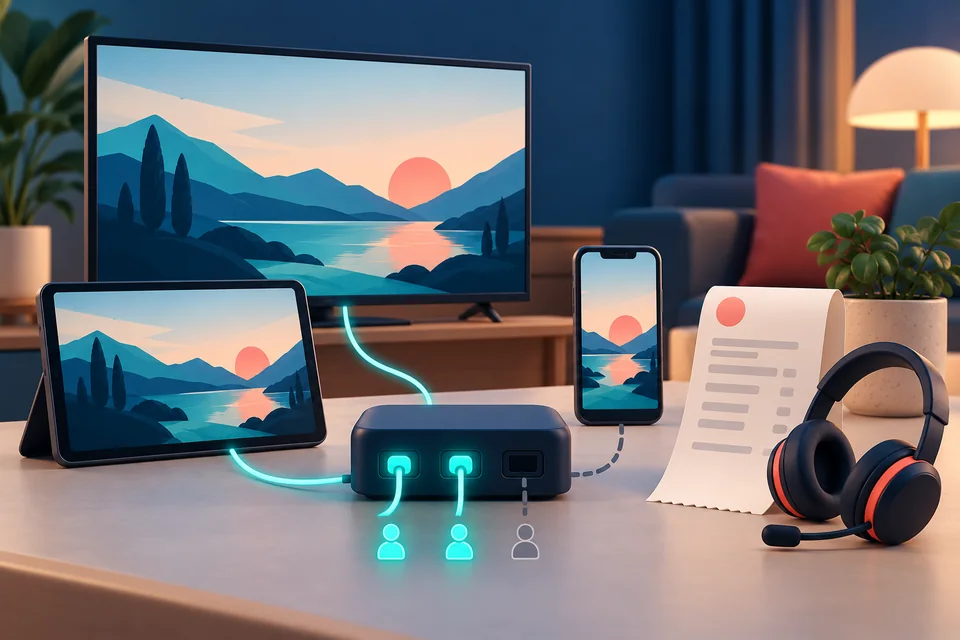
A paid account is not an unlimited entitlement
A customer may subscribe to a streaming service, sign in successfully and still be unable to start another stream. The reason might be a simultaneous-stream limit, an abandoned session or a different restriction in the purchased plan. When the interface presents only a generic payment message, the customer can mistake an entitlement issue for a failed charge and attempt to pay again.
This independent framework is for licensed IPTV and streaming businesses serving authorised markets. It concerns the connection between plan terms, session controls and payment support. It does not establish content rights or permit a merchant to expand distribution beyond its licence. The appropriate rights and commercial review must determine what the service can offer before the checkout presents it.
Establish the permitted service first
The UK government's guidance distinguishes legitimate streaming from access without the copyright owner's permission. That narrow copyright reference matters before discussing device or household access. A functioning payment system and a subscription label do not establish distribution rights. Operators must confirm the actual content, territory and service arrangements that apply to their business.
Translate the approved offer into clear plan attributes. Distinguish the number of registered devices from the number allowed to stream simultaneously, and explain any relevant household or location conditions. These are different concepts. A customer who can register several devices may reasonably misunderstand the purchase if the checkout never explains that fewer can play at the same time.
Show the limit where the purchase happens
Present the relevant restriction alongside the plan price and purchase action. Avoid relying on a long terms page as the only place where a material limit appears. Keep the wording consistent in advertisements, comparison tables, checkout and confirmation. Support needs access to the version accepted by the customer so that a later plan change does not obscure what was originally sold.
Review reseller descriptions as well as the direct site where resellers are part of the authorised model. A simplified sales page can accidentally turn a device allowance into an unlimited-stream promise. Give partners approved descriptions and a correction route. The operator should be able to identify the actual offer that led to a customer complaint instead of relying solely on its own current homepage.
Distinguish an active session from a stale one
Define how the system determines that a stream is active and how it releases a session after an interruption. An abandoned browser or disconnected device should follow the approved expiry behaviour. The technical implementation needs enough evidence to distinguish a continuing session from one that stopped sending reliable status. A device count alone may not answer that question.
Test closing a browser, losing connectivity and switching between supported devices. Compare the resulting session record with what the customer sees. Where the user can end another session, make the action understandable and apply appropriate account controls. A support agent should not need to guess which unidentified connection can be removed while the customer waits at a paid checkout.
Keep payment errors separate
A reached stream limit should not automatically trigger another payment attempt. Show the actual condition and the supported next step. If an upgrade is available, explain the new entitlement and price before obtaining the applicable authorisation. Do not make an accidental second purchase the only apparent route back into a service the customer already paid to use.
Store the plan change and payment as linked but distinct events. A successful upgrade charge must reach the entitlement system, while a failed charge should not leave the customer with an unexplained plan state. Test delayed confirmation and duplicate notifications. If the systems disagree, give support a way to inspect both records and resolve the case without charging the customer again.
Handle plan changes predictably
A downgrade can reduce the allowed simultaneous streams while existing sessions remain active. Decide the permitted behaviour in advance and explain it through the customer journey. The process should follow the actual contract and applicable consumer obligations. Engineering should not choose the commercial outcome implicitly because one system receives the change earlier than another.
Keep the effective time of the change alongside the accepted plan version. If a customer reports an interruption, support can then determine whether the restriction reflects the new plan, a stale session or an error. Avoid retroactively applying today's plan definition to an older purchase. Historical entitlements remain important when reviewing refunds and service complaints.
Give support the minimum useful evidence
Support should see the purchased plan, relevant session status and payment reference needed for the case. Avoid exposing unnecessary viewing history or sensitive account information merely to explain a stream limit. Define which staff can reset sessions, change entitlements or approve remedies. Keep a record of those actions so repeated contacts do not produce contradictory changes.
Use a short diagnostic sequence that starts with the actual restriction. Confirm the account, plan and supported device state, then investigate the relevant session or payment record. If a service fault prevented the purchased access, route the case to the appropriate remedy process. Do not dismiss every report as account sharing or treat every inability to play as grounds for another charge.
Review the commercial effect of confusion
Track complaints about simultaneous access separately from payment declines and general outages. A rise in these cases can reveal unclear plan descriptions or unreliable session release. Review examples across devices and sales channels before deciding on a fix. Increasing the advertised allowance may not solve a technical stale-session problem, and a technical patch cannot correct a misleading purchase promise.
After a change, check whether customers can complete the intended journey and whether support can explain remaining cases. Include cancellation and refund outcomes in the review. The useful measure is a consistent connection between what was sold, what the system allowed and what the customer was told when something went wrong.
What it means to Merchants
Licensed IPTV merchants should make concurrent-stream limits explicit and connect them to reliable entitlement records. Distinguish registered devices, active sessions and payment status so customers are not prompted to pay again for an access-control problem. Preserve accepted plan versions and support evidence. Clear limits and controlled remedies help the business deliver the authorised service that the customer actually purchased.